
Home

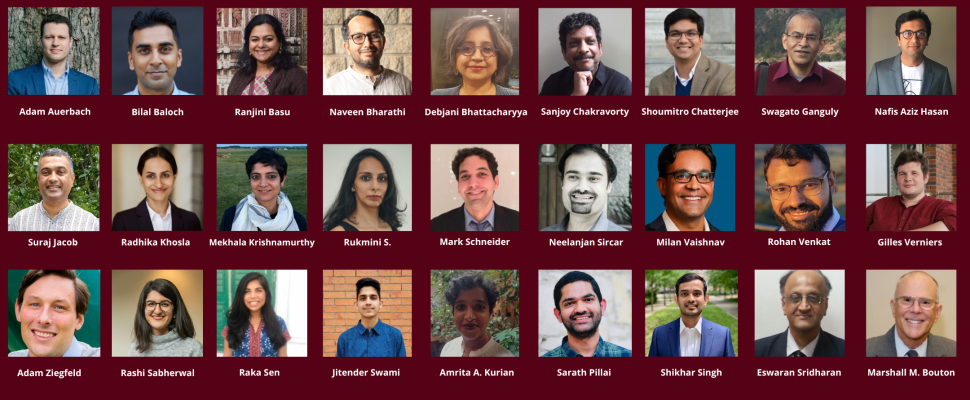
Sanjoy Chakravorty
 
June 22, 2009

In the latest issue of India in Transition, Sanjoy Chakravorty, Professor and Chair of the Department of Geography and Urban Studies at Temple University, examines the issue of major population growth taking place in India's biggest cities and the inevitable measures that must be taken to ensure security and stability in the near future.

CASI Announces Winners of Summer 2009 Travel Funds Competition

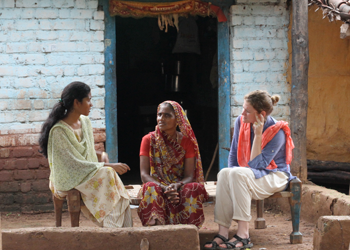
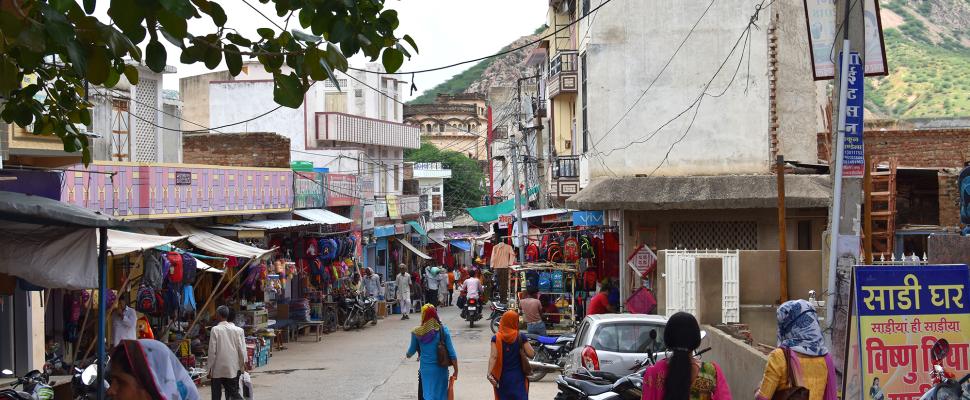
The funds for this year’s students will be distributed amongst three winners for the CASI-Piramal Foundation Summer Internship at the Grassroots Development Laboratory (GDL) in Bagar, Rajasthan; four winners for the CASI Summer Internship at Chintan Environmental Research and Action Group in New Delhi; and two winners conducting graduate-level research in India. This year’s internships are made possible through the generous support of the Office of the Provost, with special thanks to the University of Pennsylvania’s Office of International Programs (OIP) and the International Internship Program (IIP) for administering the competition.

[ CONTINUE ]


CASI Receives Grant from the John D. and Catherine T. MacArthur Foundation

The $366,000 grant, which was received through the MacArthur Foundation's Global Migration and Human Mobility program, will support research and policy efforts on the impacts of diasporas in reforming institutions in their home countries. CASI will conduct empirically-based case studies of diaspora-home country interactions as highly skilled diasporas contribute to institution-building through multiple incremental contributions to the transformation of private and public sector institutions.

Welcome from the Director

Since its founding in 1992, the Center for the Advanced Study of India (CASI) has continued to uphold Penn’s global reputation as a leading center of research in South Asian studies. The goals of the Center are threefold. The first goal is to engage in policy-relevant research focused on the challenges facing contemporary India and thereby improve our understanding of India's politics and society, its rapidly changing economy, and transformation as an ancient civilization and emerging major power. In doing so, we strive to create a forum in which scholars can dialogue with academic, policy, and business communities. The second goal is to nurture students’ interest in contemporary India through internships at the Center and interactions with visiting scholars who are in residence at CASI, as well as by providing them with opportunities to work and conduct research in India. And third, the Center aims to act as a public forum on contemporary India by hosting seminars, workshops and conferences year-round, and through our online publication, India in Transition, which provides scholars around the world a medium to exchange ideas about contemporary India.

As CASI continues to grow and expand, we hope to further strengthen ties throughout Penn and collaborate with leading research centers worldwide, including our counterpart organization based in India, the University of Pennsylvania Institute for the Advanced Study of India (UPIASI). In doing so, we look forward to furthering our role as an international hub for policy-relevant research on modern India.

-Devesh Kapur
Director, Madan Lal Sobti Professorship for the Study of Contemporary India